How to architect AI
for your organization
Choosing the right platform is critical. We’ve made it easy: compare tools, frameworks, and platforms to make the best decision.
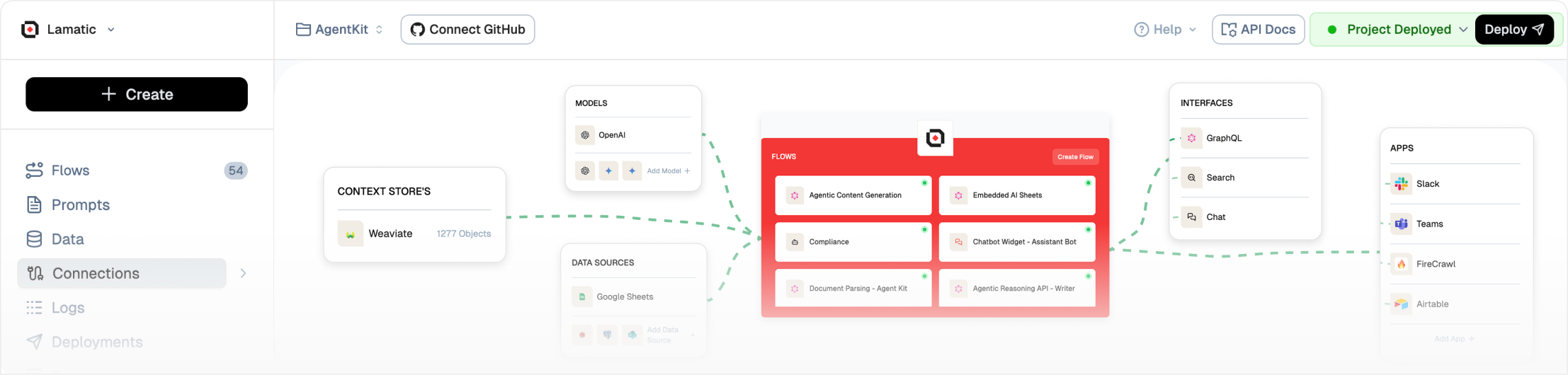
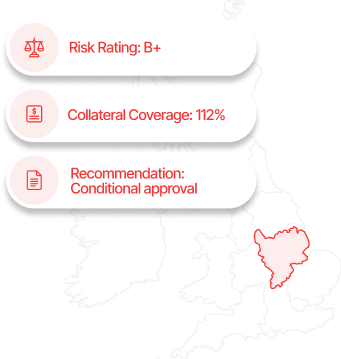
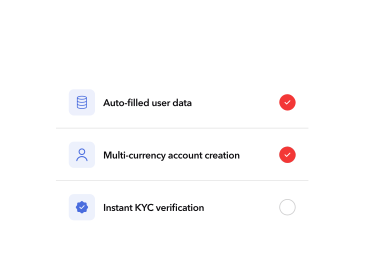
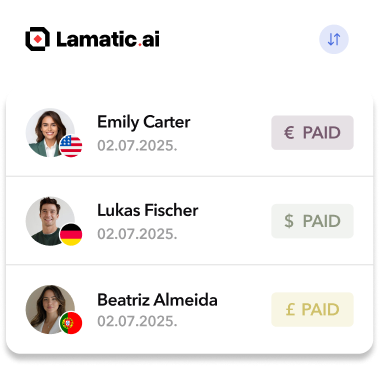
How Lamatic Supports Financial Workflows
Direct Foundation Model APIs
You integrate directly with a model provider’s API and build orchestration logic yourself.
Raw model APIs offer maximum flexibility and fast iteration with minimal abstraction. But you must handle orchestration, routing, and memory yourself, and complexity grows quickly with multi-step workflows, RAG, fallback logic, and production-grade reliability.
Best for:
- Prototypes
- Lightweight AI featuresEarly experimentationSmall-scale use cases
- Early experimentation
- Small-scale use cases
Automation Platforms
No-code or low-code workflow automation platforms with AI integrations.
Automation platforms are quick to deploy with pre-built connectors and low engineering overhead. But they lack AI-native abstractions, struggle with long-term state, and become brittle when scaling to AI product features, stateful agents, or large data pipelines.
Best for:
- Internal automation
- Marketing workflows
- AI triggers inside business processes
- Non-technical teams
DIY AI Middleware
Developer frameworks that provide modular components for building AI pipelines and orchestration logic.
Custom AI stacks offer high flexibility, modular architecture, and fine-grained control with custom routing logic. But they come with heavy maintenance, version drift, infrastructure management, and DevOps overhead—often breaking down for small teams, fast go-to-market needs, or long-term scale.
Best for:
- Engineering-driven teams
- Custom AI infrastructure
- Deep architectural control
Hyperscaler AI Platforms
Cloud-native AI services are integrated into enterprise cloud ecosystems.
Enterprise platforms provide strong governance, security frameworks, cloud-native integration, and dedicated support. But they introduce vendor lock-in, complex setup, higher costs, and require cloud expertise—making them less suited for startup agility, cross-cloud flexibility, or rapid experimentation.
Best for:
- Enterprise IT environments
- Security and compliance-heavy industries
- Large-scale deployments
AI-Native Platform-as-a-Service
A managed AI orchestration layer designed specifically for building AI applications — without managing raw infrastructure.
AI infrastructure platforms offer built-in orchestration, model-agnostic workflows, and reduced infrastructure overhead through higher-level abstractions. They come with an opinionated architecture, less customization than DIY stacks, and reliance on the platform’s abstraction layer.
Best for:
- Product teams building AI features
- Multi-model routing
- AI-native workflows
- Faster time-to-market
High-Level Tradeoff Overview
There is no universally “best” option — only the one that matches your constraints.
Benchmark tool
Choose which tools you want to compare
Share with your CTO